
Finding the right property in 2026 has become a strategic game for many homeowners and investors throughout the Okanagan, Sicamous, and Shuswap regions. Houses in need of renovation represent an incredible opportunity to build equity, create your dream space, and enter competitive markets at more accessible price points. Whether you're looking at a charming Victorian in Vernon or a lakeside cabin in Sicamous that needs updating, understanding the renovation process transforms what seems overwhelming into an exciting journey.
The current housing market has shifted dramatically, with more buyers recognizing that cosmetic updates and structural improvements can unlock tremendous value. Many properties classified as fixer-uppers offer solid bones at prices well below move-in ready homes, making them attractive options for first-time buyers and seasoned renovators alike.
Why Houses in Need of Renovation Are Worth Considering
The appeal of renovation properties extends far beyond simple cost savings. When you purchase a home that requires work, you're buying potential rather than someone else's finished vision.
Financial advantages dominate the conversation:
- Purchase prices typically 15-30% below comparable renovated homes
- Opportunity to build sweat equity through strategic improvements
- Control over material quality and design choices
- Potential tax benefits depending on your situation
Beyond the numbers, there's something deeply satisfying about transforming a neglected space into something beautiful. Many homeowners in the Shuswap have discovered that renovation projects allow them to create truly personalized spaces that reflect their lifestyle and values.

Market data shows interesting regional variations. According to recent analysis of renovation opportunities, certain areas consistently offer more fixer-upper properties, though the principles apply universally whether you're in the UK or British Columbia.
What Makes a House "Need Renovation"
Not all renovation projects are created equal. Understanding the spectrum helps you make informed decisions.
Cosmetic renovations involve surface-level improvements:
- Outdated paint colors and flooring
- Old kitchen cabinets and countertops
- Bathroom fixtures from previous decades
- Landscaping that needs refreshing
Moderate renovations dig deeper:
- Electrical system upgrades
- Plumbing repairs or replacements
- Roof repairs or replacement
- Window and door replacements
Major structural work requires serious commitment:
- Foundation repairs
- Load-bearing wall modifications
- Complete system overhauls
- Extensive water or fire damage restoration
The key is honestly assessing which category your potential property falls into. What appears cosmetic might hide deeper issues, which is why professional inspections become non-negotiable investments.
Finding Houses in Need of Renovation in Your Area
The hunt for the perfect renovation project requires strategy, patience, and local knowledge. In markets like Sicamous and the broader Okanagan, knowing where to look gives you a competitive edge.
Traditional search methods:
- MLS listings with specific filters – Search for keywords like "handyman special," "TLC needed," or "investor opportunity"
- Drive through established neighborhoods – Older areas often hide gems before they hit the market
- Estate sales and probate properties – These situations sometimes create motivated sellers
- Bank-owned and foreclosure listings – Financial institutions want quick sales
- Connect with local contractors – Professionals like those at Kreeative often hear about upcoming opportunities
Working with a realtor who understands renovation potential changes everything. They can spot opportunities others miss and help you calculate realistic budgets before you commit.
Red Flags vs. Green Lights
Learning to differentiate deal-breakers from manageable projects protects your investment and sanity.
| Red Flags | Green Lights | Negotiable Issues |
|---|---|---|
| Major foundation cracks | Cosmetic damage only | Outdated electrical (permits available) |
| Extensive mold throughout | Solid roof and structure | Old plumbing (accessible) |
| Unpermitted additions | Good neighborhood | Dated kitchen/bathrooms |
| Buried oil tanks | Strong bones (joists, framing) | Minor water damage |
| Active pest infestations | Land value alone justifies price | Deferred maintenance |
Understanding the pros and cons of buying homes that need renovation helps you enter negotiations with realistic expectations and stronger bargaining positions.
Some of the best renovation opportunities in rural areas like the Shuswap involve properties with incredible land but dated structures. Lake-access homes particularly fall into this category, where location value far exceeds building condition.
Creating a Realistic Renovation Budget
Money conversations feel uncomfortable but become crucial when tackling houses in need of renovation. Underfunding projects causes stress, delays, and compromised results.
Start with professional assessments:
Get multiple quotes for major systems. A qualified contractor builder can walk through the property and provide detailed estimates that account for hidden issues and necessary permits.
Your budget should include these often-forgotten categories:
- Contingency fund (minimum 20% of total renovation costs)
- Permit and inspection fees
- Temporary housing if needed
- Storage for belongings during construction
- Design and architectural services
- Project management if you're not on-site
Breaking Down Costs by Room
Understanding typical renovation costs helps you prioritize spending and make strategic decisions.
| Room/Area | Low-End Budget | Mid-Range Budget | High-End Budget |
|---|---|---|---|
| Kitchen | $15,000-25,000 | $30,000-50,000 | $60,000+ |
| Bathroom | $8,000-15,000 | $18,000-30,000 | $40,000+ |
| Living spaces | $5,000-10,000 | $12,000-25,000 | $35,000+ |
| Exterior/curb appeal | $8,000-15,000 | $20,000-40,000 | $60,000+ |
| Systems (HVAC, electrical, plumbing) | $10,000-20,000 | $25,000-45,000 | $60,000+ |
These ranges reflect 2026 pricing in Canadian markets and vary based on material choices, labor rates, and project scope. Rural Okanagan projects might see different pricing than urban centers.
Smart renovators focus spending where it matters most. Interior renovation investments typically provide the strongest returns, particularly in kitchens and primary bathrooms.

The Renovation Planning Process
Jumping into demolition without proper planning leads to costly mistakes and project delays. Houses in need of renovation demand methodical approaches.
Phase 1: Assessment and Vision Development
Walk through the property multiple times at different times of day. Notice how light moves through spaces, where traffic patterns naturally flow, and which structural elements you want to preserve or highlight.
Create a detailed wishlist, then categorize items:
- Must-have (safety, structural, systems)
- Should-have (major quality-of-life improvements)
- Nice-to-have (aesthetic upgrades, future projects)
This categorization becomes your roadmap when budgets get tight or timelines compress.
Phase 2: Design and Professional Input
Even if you're handy, bringing in experienced professionals early saves money long-term. Architects, designers, and experienced renovation contractors spot potential issues before they become expensive problems.
Permit requirements vary significantly across municipalities. What's acceptable in Sicamous might need different approvals in Vernon or Kelowna. Research local building codes early and factor permit timelines into your schedule.
Phase 3: Sequencing the Work
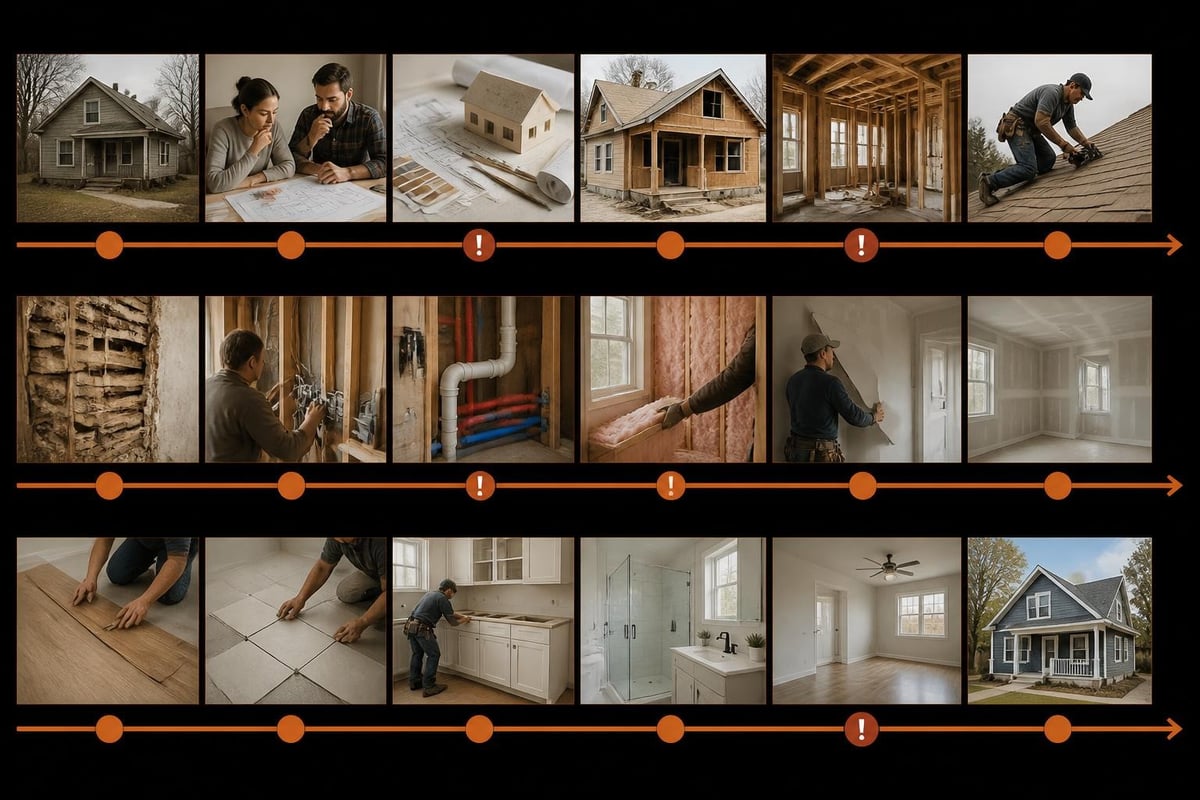
Order matters tremendously in renovation projects:
- Structural and systems work (foundation, framing, roofing)
- Rough-ins (electrical, plumbing, HVAC)
- Insulation and drywall
- Interior finishes (flooring, cabinetry, countertops)
- Paint and trim
- Final fixtures and hardware
- Exterior completion (landscaping, final touches)
Attempting to skip ahead or work out of sequence creates delays, additional costs, and compromised quality. Patience during the process protects your investment.
Living Through a Renovation
The decision to live in houses in need of renovation during construction requires honest assessment of your tolerance for disruption.
Pros of living on-site:
- Monitor progress daily
- Make real-time decisions
- Save temporary housing costs
- Maintain security of property and materials
Cons of living on-site:
- Dust, noise, and constant disruption
- Limited access to kitchen and bathrooms
- Safety concerns with active construction
- Stress on relationships and mental health
Many Okanagan homeowners choose hybrid approaches, living on-site during less invasive phases and finding temporary accommodations during major demolition or system work.
Managing Contractors and Timelines
Clear communication prevents most renovation headaches. Establish these practices from day one:
Weekly check-ins covering progress, upcoming work, and any concerns create accountability and alignment. Document everything in writing, including change orders, material selections, and timeline adjustments.
Understanding social and material factors in renovation decisions helps you recognize that delays often stem from supply chain issues, weather, or discovery of hidden problems rather than contractor incompetence.
Set realistic expectations around timelines. A complete renovation of houses in need of renovation typically takes:
- Small projects (single room): 2-4 weeks
- Medium projects (kitchen or bathroom): 6-12 weeks
- Large projects (whole house): 4-8 months
- Major structural overhauls: 8-18 months
Weather impacts timelines significantly in our region. Winter projects face delays from snow, cold temperatures affecting materials, and limited daylight hours for exterior work.
Technology and Modern Renovation Approaches
The renovation industry has evolved dramatically, with new tools and approaches streamlining traditional processes. Innovative solutions like AI-assisted renovation planning showcase how technology intersects with traditional craftsmanship.
Modern project management software keeps everyone aligned. Homeowners can track budgets, view progress photos, approve material selections, and communicate with contractors through centralized platforms.
Digital tools worth exploring:
- 3D visualization software showing finished spaces before construction begins
- Virtual reality walkthroughs of proposed layouts
- Online material libraries with real-time pricing
- Project scheduling apps with automated milestone tracking
- Budget management tools flagging cost overruns early
Even advanced facade renovation frameworks demonstrate how specialized technologies can optimize specific renovation challenges, though most residential projects rely on proven traditional methods combined with modern efficiencies.
Sustainable Renovation Practices
Houses in need of renovation present unique opportunities for implementing sustainable upgrades that reduce long-term operating costs and environmental impact.
Energy efficiency improvements:
- High-performance windows and doors
- Advanced insulation systems (spray foam, rigid board)
- Energy-efficient HVAC systems
- LED lighting throughout
- Water-saving fixtures and appliances
Many older homes in the Shuswap and Okanagan lack proper insulation and air sealing. Addressing these fundamentals during renovation creates comfortable, efficient spaces that cost less to heat and cool year-round.
Consider material choices carefully. Locally sourced materials reduce transportation costs and support regional economies. Reclaimed and recycled materials add character while reducing waste.
Maximizing Value Through Strategic Updates
Not all renovation dollars generate equal returns. Strategic improvements to houses in need of renovation focus on updates that enhance daily living while building resale value.
Highest return renovations:
- Kitchen remodeling – 60-80% cost recovery
- Bathroom updates – 55-70% cost recovery
- Curb appeal enhancements – 75-100% cost recovery
- Energy efficiency upgrades – Varies, but reduces operating costs
- Additional living space (finished basements, additions) – 50-65% cost recovery
Regional preferences matter significantly. Okanagan buyers prioritize outdoor living spaces and views. Lake-access properties benefit from dock improvements and waterfront landscaping. Understanding your specific market guides smart investment decisions.
Don't Over-Renovate for the Neighborhood
Matching renovation quality and scope to neighborhood standards prevents over-investment. Installing luxury finishes in starter-home neighborhoods rarely returns full value at resale.
Research recent comparable sales. If similar homes sell for $600,000-650,000, keeping your total investment (purchase plus renovation) below $550,000 provides comfortable equity cushion.
Working with experienced professionals who understand local markets helps calibrate expectations and budgets appropriately. Teams familiar with both Victorian house renovations and modern updates bring valuable perspective to project planning.
Common Renovation Mistakes to Avoid
Learning from others' mistakes saves money, time, and frustration when tackling houses in need of renovation.
Top mistakes we see repeatedly:
- Skipping professional inspections – That $500 inspection prevents $50,000 surprises
- Underestimating timelines – Everything takes longer than expected
- Changing plans mid-project – Design changes during construction multiply costs
- Choosing cheapest bids without vetting contractors – Quality varies tremendously
- Ignoring permits – Unpermitted work creates sales problems and safety risks
- Poor communication – Assumptions lead to expensive misunderstandings
DIY decisions require honest self-assessment. Painting? Most people handle it fine. Electrical work? Hire licensed professionals. Plumbing? Depends on complexity and your skill level.
Know your limits and value your time appropriately. Spending weekends on tasks you could hire out for reasonable rates while neglecting higher-value activities rarely makes financial sense.
Material Selection Pitfalls
Beautiful showroom samples don't always translate to durable, practical choices for real-world use.
Consider these factors:
- Maintenance requirements (high-gloss finishes show every fingerprint)
- Durability for your lifestyle (white counters with young kids?)
- Long-term availability (can you get matching tiles in five years?)
- Installation complexity (some materials require specialized skills)
- Local climate suitability (not all materials handle temperature swings well)
Trendy choices age poorly. Classic, quality materials maintain appeal across decades. Gray everything dominated 2015-2020 but feels dated now. Timeless neutrals and natural materials endure style shifts.
Working With Renovation Professionals
The right team transforms stressful renovation projects into smooth, even enjoyable experiences. Houses in need of renovation demand expertise across multiple trades.
Building your renovation team:
Start with a lead contractor or project manager who coordinates all trades. This central point person ensures proper sequencing, handles scheduling conflicts, and maintains quality standards across all work phases.
Look for these qualities in renovation professionals:
- Proper licensing and insurance (non-negotiable)
- Strong local references (talk to previous clients)
- Clear communication style (responsiveness matters)
- Detailed written proposals (vague estimates become budget disasters)
- Problem-solving mindset (renovations always include surprises)
Companies with decades of experience bring invaluable knowledge about what works in specific regions, common local challenges, and reliable trade partners.
Contract Essentials
Protect yourself with comprehensive written agreements covering:
| Contract Element | What to Include |
|---|---|
| Scope of work | Detailed description of all tasks, materials, finishes |
| Payment schedule | Tied to milestones, not calendar dates |
| Timeline | Start date, substantial completion, final completion |
| Change order process | How modifications are requested, priced, approved |
| Warranty information | What's covered, for how long, who handles claims |
| Cleanup and disposal | Who removes debris, how often, final cleaning |
| Communication protocols | How often, through what channels, decision timeframes |
Never pay the full amount upfront. Typical schedules involve 10-20% deposit, progress payments tied to completion stages, and 10-15% holdback until final approval.
Read everything carefully before signing. Unclear terms create disputes. Ask questions until you completely understand every clause and obligation.
Renovation Inspiration and Design Trends
While timeless design principles should guide major decisions, understanding current trends helps houses in need of renovation feel fresh and appealing.
2026 design directions:
- Warm, natural materials (wood tones, stone, organic textures)
- Flexible spaces (home offices, multi-purpose rooms)
- Indoor-outdoor connection (large doors, covered outdoor rooms)
- Statement lighting (sculptural fixtures as focal points)
- Mixed metal finishes (breaking away from matchy-matchy)
Okanagan-specific considerations include maximizing natural light, framing views, and creating weather-appropriate outdoor living spaces. Lake properties benefit from durable, moisture-resistant materials that withstand humidity and temperature fluctuations.
Color trends lean toward:
- Warm whites and creams (goodbye stark white)
- Earthy greens and clay tones
- Warm grays (not cool, blue-toned grays)
- Natural wood tones (medium to darker)
- Black accents (windows, hardware, fixtures)
Remember that paint color changes easily and inexpensively. Base selections for permanent elements like flooring, cabinetry, and countertops on classic choices that won't feel dated quickly.
Transforming houses in need of renovation into beautiful, functional spaces requires planning, patience, and the right professional partners. Whether you're tackling cosmetic updates or complete overhauls in the Okanagan, Sicamous, or Shuswap regions, working with experienced teams makes all the difference. Kreeative Renovations & Design Co. brings over 32 years of expertise to every project, from initial vision to final walk-through, ensuring your renovation journey creates the home you've always imagined. Talk to Kreeative about your next project and discover what's possible with quality craftsmanship and thoughtful design.


