
Transforming a house into your dream home requires more than just good ideas and skilled hands working independently. The magic happens when creative vision meets expert craftsmanship, when an interior design and contractor partnership functions as a unified team. In the Okanagan, Sicamous, and Shuswap regions, homeowners are discovering that successful renovations depend heavily on this collaborative relationship. Whether you're planning a kitchen remodel Okanagan style or a complete bathroom renovation Sicamous project, understanding how designers and contractors work together can make the difference between a frustrating experience and a transformation that exceeds your expectations.
The Foundation of Interior Design and Contractor Collaboration
At its core, the relationship between interior design and contractor teams revolves around translating creative concepts into physical reality. Designers bring aesthetic vision, spatial planning expertise, and knowledge of materials and finishes. Contractors contribute technical know-how, building code compliance, and hands-on construction skills.
This partnership works best when both parties recognize their interdependence from day one. A designer might envision a stunning floating vanity for your bathroom renovation, but without the contractor's input on structural support and plumbing logistics, that vision could become a costly nightmare. Similarly, a contractor might know the most efficient way to frame a wall, but the designer ensures that wall placement creates the flow and functionality you actually need.
Why Separate Approaches Fail
Many homeowners make the mistake of hiring these professionals separately, creating a disjointed process where miscommunication thrives. The designer creates beautiful plans without understanding construction limitations. The contractor builds efficiently but misses subtle design intentions. The homeowner becomes a frustrated middleman, translating between two parties who should be speaking directly.
Common problems from disconnected teams include:
- Design revisions mid-construction that inflate budgets
- Material selections that don't work with structural realities
- Timeline delays from poor coordination
- Finger-pointing when problems arise
- Compromised final results that satisfy neither vision nor function
According to research on design project collaboration, effective partnerships between design and construction teams can reduce project timelines by up to 30% and significantly decrease budget overruns.
How the Best Interior Design and Contractor Teams Operate
Professional renovation companies in the Shuswap understand that integrated approaches deliver superior results. When you work with a team that handles both design and construction under one roof, you eliminate the communication gaps that plague traditional projects.
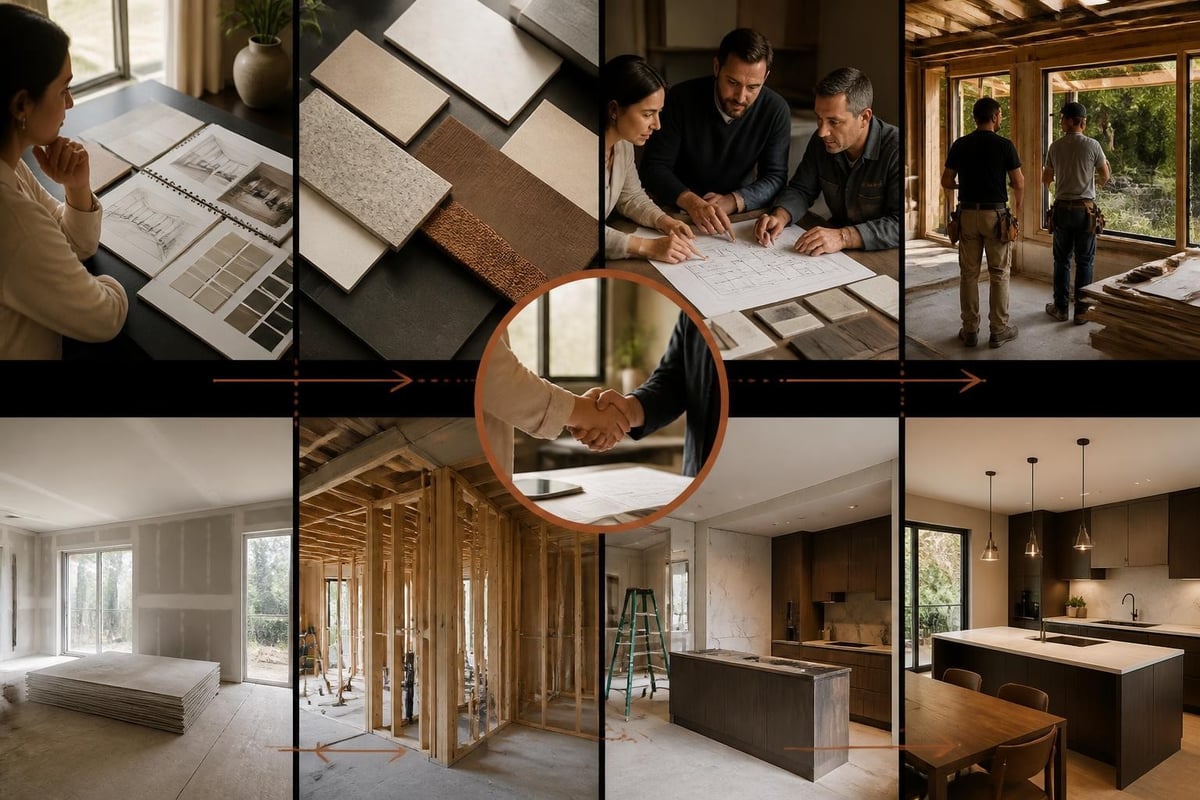
The process typically flows through these coordinated stages:
- Initial consultation where both designer and contractor meet with you together
- Collaborative design development with real-time feasibility checks
- Detailed planning that accounts for both aesthetics and construction logistics
- Material selection guided by design vision and installation requirements
- Coordinated construction where the designer's intent guides every decision
- Continuous communication throughout the build process
The Design Phase Integration
During initial planning, having your contractor involved alongside your designer creates immediate value. When discussing your kitchen remodel Okanagan project, the contractor can instantly flag if that stunning range hood requires expensive structural modifications. This doesn't mean abandoning your vision; it means refining it intelligently before committing resources.
Smart interior design and contractor partnerships also leverage each professional's network. Designers often have relationships with specialty suppliers and craftspeople. Contractors know which subcontractors deliver quality work on schedule. This combined network becomes your resource pool.
| Design Phase Element | Designer Contribution | Contractor Contribution | Combined Benefit |
|---|---|---|---|
| Space Planning | Functional layouts, flow optimization | Structural feasibility, code compliance | Designs that work beautifully and legally |
| Material Selection | Aesthetic coordination, trend knowledge | Installation requirements, durability | Choices that look great and last |
| Budget Development | Design priorities, upgrade options | Accurate cost estimation, value engineering | Realistic budgets without surprises |
| Timeline Creation | Design development schedule | Construction sequencing, lead times | Achievable schedules everyone commits to |
Communication Strategies That Prevent Project Disasters
Even the most talented interior design and contractor professionals can't succeed without solid communication systems. The best teams establish clear protocols from the start, ensuring everyone stays informed and aligned.
Weekly coordination meetings keep projects on track. These shouldn't be marathon sessions but focused check-ins where the designer and contractor discuss upcoming work, resolve emerging issues, and update you on progress. In Sicamous contractor projects spanning remote or lake-access properties, these meetings become even more critical as logistics grow more complex.
Understanding the importance of strong contractor and designer collaboration reveals that projects with structured communication protocols experience 40% fewer change orders and disputes.
Documentation and Decision-Making
Professional teams maintain detailed documentation that protects everyone. This includes comprehensive contracts outlining the essential clauses every interior design project needs, design drawings with specifications, material schedules, and change order processes.
When decisions need to be made mid-project, clear hierarchies prevent delays. Who has final say on paint color if the specified shade is discontinued? What's the approval process for necessary structural changes? Establishing these answers upfront saves time and frustration later.
For commercial renovation Okanagan projects, this documentation becomes even more essential as building codes, accessibility requirements, and business operation continuity add complexity layers.

The Financial Benefits of Integrated Teams
Budget concerns drive many renovation decisions, and the interior design and contractor partnership structure directly impacts your bottom line. While some homeowners worry that hiring both professionals seems expensive, integrated teams often save money compared to fragmented approaches.
Cost savings emerge through:
- Accurate initial budgeting that prevents financial surprises
- Value engineering that maintains design quality while controlling costs
- Reduced waste from precise material ordering
- Fewer change orders from better upfront planning
- Faster project completion reducing labor hour totals
Consider a bathroom renovation project where the designer selects custom tile but the contractor isn't consulted. Mid-installation, you discover the tile requires specialized installation techniques adding thousands to your budget. An integrated team would have identified this during selection, either choosing a different tile or budgeting appropriately from the start.
Transparent Pricing Models
Companies offering comprehensive interior renovation services typically provide more transparent pricing because they control both design and construction variables. There's no markup inflation as information passes between separate companies, and accountability is clear when one team handles the entire project.
This transparency extends to discussing trade-offs. Maybe your dream kitchen exceeds your budget. An integrated interior design and contractor team can immediately suggest alternatives: different cabinet finishes, alternative countertop materials, or phased implementation approaches. You see options rather than just hearing "no."
Material Selection and Installation Coordination
One of the most critical intersection points between interior design and contractor work involves materials. The designer's selections must align with the contractor's ability to source, transport, and install them properly, especially in Shuswap renovations where material availability and delivery logistics can be challenging.
Professional teams establish material selection workflows that consider multiple factors simultaneously. The designer presents options that fit your aesthetic goals. The contractor evaluates each for installation complexity, lead times, and regional availability. Together, they guide you toward choices that deliver the look you want without creating construction headaches.
The Reality of Material Lead Times
In 2026, supply chain awareness remains crucial for successful renovations. That imported tile might be stunning, but if it ships from overseas on an eight-week lead time, it could delay your entire project. Adopting smart renovation habits includes selecting materials with realistic availability timelines.
A coordinated interior design and contractor team tracks these details systematically. They order materials in the correct sequence, arrange proper storage for early deliveries, and have backup options identified if supply issues emerge. This proactive approach keeps your project moving forward.
| Material Category | Design Considerations | Construction Considerations | Partnership Solution |
|---|---|---|---|
| Flooring | Style, color, texture, pattern | Substrate preparation, acclimation time, installation method | Early selection with proper timeline padding for delivery and acclimation |
| Cabinetry | Layout, finish, hardware, storage features | Installation sequence, utility coordination, adjustment requirements | Custom or semi-custom choices with confirmed lead times and installation plans |
| Countertops | Material type, edge profile, color matching | Template timing, seam placement, support needs | Field measurements after cabinet installation with fabrication coordination |
| Lighting | Fixture style, placement, lighting layers | Electrical rough-in locations, load requirements, dimming compatibility | Early fixture selection for proper electrical planning and timely ordering |
Problem-Solving When Surprises Emerge
No renovation proceeds exactly as planned. Hidden structural issues, discontinued products, or unexpected site conditions require quick, informed decisions. The interior design and contractor partnership structure enables faster, better problem-solving because both perspectives immediately inform solutions.
Imagine discovering rot damage during a kitchen remodel. The contractor identifies the repair scope and structural requirements. The designer simultaneously considers how repairs might affect the layout or create opportunities for improvements. Together, they present you with options that address the problem while maintaining your project's integrity.
Adapting Design Intent
Sometimes construction realities require design modifications. Perhaps that wall you wanted to remove is load-bearing, requiring expensive beam installation. A skilled designer doesn't just abandon the open-concept goal but instead explores alternative approaches: wider openings, strategic partial removal, or visual continuity tricks that achieve similar effects.
This adaptive creativity flourishes when interior design and contractor professionals work as partners rather than adversaries. The contractor isn't killing the designer's vision; they're collaborating to evolve it into something buildable that still serves your needs.
Learning how designers and contractors work together effectively shows that successful partnerships treat obstacles as creative challenges rather than project-ending problems.
Quality Control Through Dual Expertise
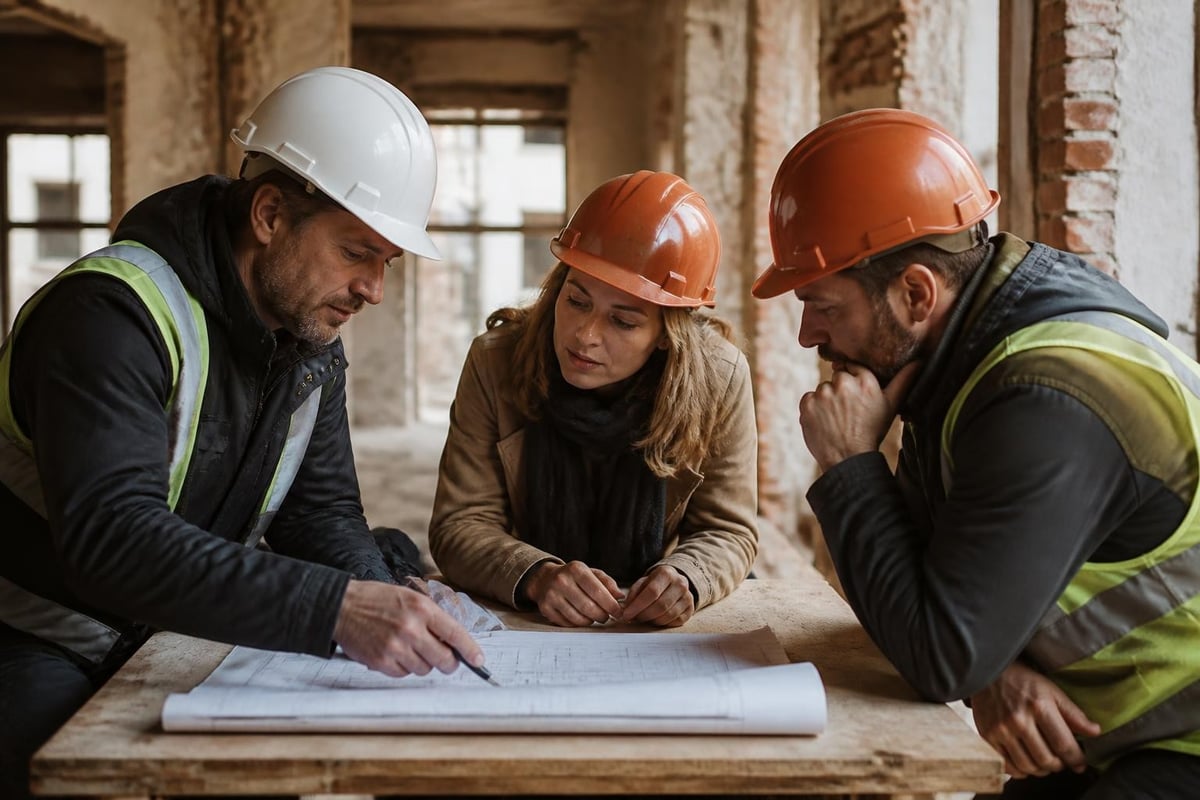
Quality assurance improves dramatically when interior design and contractor perspectives both evaluate work throughout construction. Designers catch aesthetic details like grout line consistency, paint finish quality, or fixture alignment. Contractors verify structural soundness, code compliance, and installation integrity.
This dual oversight creates multiple quality checkpoints. After drywall installation, the contractor confirms proper backing and blocking. The designer verifies that walls are positioned precisely for the planned layout. Before tile goes down, the contractor checks substrate preparation. The designer confirms the layout matches the approved design.
Quality benefits of integrated teams:
- Earlier defect detection when corrections are easier and cheaper
- Higher attention to detail across both function and aesthetics
- Reduced punch list items at project completion
- Better long-term performance from proper installation techniques
- Greater overall satisfaction with finished results
For homeowners starting renovation projects in the Okanagan region, this quality focus means your investment delivers lasting value rather than requiring premature repairs.
Timeline Management and Realistic Scheduling
Coordinated interior design and contractor teams create more accurate, achievable schedules because they understand how design decisions affect construction timelines and vice versa. The designer knows that complex tile patterns require more installation time. The contractor understands that custom millwork extends lead times.
Building realistic schedules requires accounting for design development, permitting, material procurement, construction phases, and finishing work. Integrated teams sequence these elements logically, identifying dependencies and building in appropriate buffers.
Regional Considerations for Shuswap and Sicamous Projects
Working in lake-access or rural Okanagan locations adds unique scheduling factors. Material deliveries to remote sites require more planning. Weather affects construction windows more significantly. Specialized trades might require advance booking due to limited regional availability.
Experienced local contractors factor these elements into scheduling from the start. They know which suppliers serve the Sicamous area reliably, which seasons work best for specific project types, and how to coordinate work on properties with limited access.
The Long-Term Relationship Advantage
Successful interior design and contractor partnerships often extend beyond single projects. When you find a team that understands your style, respects your budget, and delivers quality results, that relationship becomes valuable for future renovations, maintenance, or new projects.
These ongoing relationships bring efficiency to subsequent work. The team already knows your preferences, your property's quirks, and your decision-making style. They can provide accurate estimates more quickly and execute work more efficiently because familiarity eliminates learning curves.
Many homeowners in the Shuswap renovate in phases as budgets allow or needs evolve. Starting with a bathroom renovation Sicamous project might lead to kitchen updates, outdoor living spaces, or whole-home transformations over time. A trusted interior design and contractor partner makes each phase smoother.
Choosing the Right Integrated Team
Finding professionals who work together effectively requires evaluating both individual expertise and collaborative capabilities. Look for teams with proven track records of completed projects, positive client testimonials, and clear communication styles that match your preferences.
Key evaluation criteria include:
- Portfolio demonstrating style range and quality standards
- References from clients with similar project scopes
- Clear process explanations and timeline expectations
- Transparent pricing structures and contract terms
- Professional credentials and insurance coverage
- Local knowledge of building codes and regional considerations
Ask potential teams how they handle disagreements between design vision and construction reality. Their answer reveals whether they truly collaborate or simply coexist. The best teams describe a problem-solving partnership where both perspectives inform creative solutions.
Exploring how various parties collaborate in interior design emphasizes that successful projects depend on coordination and mutual respect among all stakeholders.
Technology Tools Enhancing Collaboration
Modern interior design and contractor partnerships leverage technology to improve coordination and client communication. 3D rendering software helps visualize designs before construction begins. Project management platforms track tasks, timelines, and budgets in real-time. Digital material libraries streamline selection processes.
These tools reduce misunderstandings by making abstract concepts concrete. When you can see a photorealistic rendering of your renovated space, design decisions become clearer. When you access a shared project dashboard showing current status, you stay informed without constant phone calls.
However, technology serves the relationship rather than replacing it. The most sophisticated software can't substitute for experienced professionals who understand both design principles and construction realities working together toward your goals.
Regional Expertise in Okanagan Renovations
Working with interior design and contractor teams who understand regional characteristics brings significant advantages. Climate considerations affect material choices and construction techniques. Local building codes and permit processes vary by municipality. Regional aesthetic preferences and architectural styles influence design decisions.
In Okanagan renovations, professionals familiar with the area know how to design for both cold winters and hot summers, creating comfortable, energy-efficient spaces. They understand moisture management crucial for lake-adjacent properties. They're familiar with local suppliers offering the best value and selection.
This regional knowledge prevents costly mistakes. A contractor unfamiliar with Shuswap winter conditions might select exterior materials that won't withstand freeze-thaw cycles. A designer without local market knowledge might specify fixtures unavailable through regional suppliers, creating delivery delays and extra costs.
The partnership between interior design and contractor professionals determines whether your renovation becomes a dream fulfilled or a stressful ordeal. When creative vision and construction expertise unite under one coordinated team, projects proceed more smoothly, budgets remain controlled, and results exceed expectations. Ready to transform your space with professionals who handle both design and build? Talk to Kreeative Renovations & Design Co. about your next project and experience the difference that 32 years of integrated expertise makes for Okanagan, Sicamous, and Shuswap homeowners.


