
Transforming a basement into a functional, comfortable living space while prioritizing sustainability isn't just a trend-it's a smart investment in your home's future. Green basement remodeling combines energy efficiency, eco-friendly materials, and healthier indoor environments to create spaces that benefit both your family and the planet. Whether you're in the Okanagan, Sicamous, or Shuswap regions, understanding sustainable renovation practices can help you make informed decisions that reduce environmental impact while increasing your home's value.
Understanding the Benefits of Sustainable Basement Renovations
When homeowners consider renovating their lower levels, going green offers advantages that extend far beyond environmental responsibility. Energy savings top the list, with properly insulated and efficiently designed basements cutting heating costs by 20-30% annually. That's significant money back in your pocket, especially during cold Okanagan winters.
Improved air quality represents another critical benefit. Traditional basement remodels often trap moisture and off-gas chemicals from conventional materials. Green approaches prioritize ventilation systems and low-VOC products that keep your family breathing easier.
The National Green Building Standard certification establishes clear benchmarks for sustainable remodeling projects, making it easier to verify that your renovation meets recognized environmental standards.
Property value increases too. Buyers actively seek homes with energy-efficient features and sustainable upgrades. A green basement remodeling project can provide a competitive edge in real estate markets throughout the Shuswap region.
Long-Term Cost Considerations
| Expense Category | Traditional Approach | Green Approach | 10-Year Savings |
|---|---|---|---|
| Energy Costs | $2,500/year | $1,750/year | $7,500 |
| Maintenance | $1,200/year | $600/year | $6,000 |
| Health-Related | Variable | Lower risk | Significant |
These numbers reflect real-world experiences from contractors working on Okanagan renovations. While initial costs for sustainable materials may run 10-15% higher, the payback period typically ranges from 3-5 years.

Essential Materials for Eco-Friendly Basement Spaces
Choosing the right materials makes all the difference in green basement remodeling success. Start with insulation that performs without compromising air quality. Recycled denim, cellulose, and mineral wool insulation offer excellent R-values while avoiding the harmful chemicals found in traditional fiberglass.
Flooring decisions carry significant weight. Bamboo grows rapidly and regenerates quickly, making it highly sustainable. Cork provides natural antimicrobial properties and cushioning comfort underfoot. Reclaimed wood adds character while giving old materials new life.
For wall systems, moisture-resistant materials and energy-efficient products prevent the mold issues that plague many basement spaces. Consider:
- Cement board instead of traditional drywall in moisture-prone areas
- Low-VOC paints that don't release harmful chemicals
- Recycled metal studs that won't warp or rot
- Natural fiber wallpapers without synthetic adhesives
Lighting choices dramatically impact energy consumption. LED fixtures use 75% less energy than incandescent bulbs and last 25 times longer. Installing dimmer switches and motion sensors in basement spaces reduces waste further.
Moisture Management and Air Quality Solutions
Basements naturally attract moisture, making water management absolutely essential in any green basement remodeling project. Poor moisture control leads to mold growth, structural damage, and unhealthy air that circulates throughout your entire home.
Start with proper exterior drainage. French drains, properly graded landscaping, and well-maintained gutters keep water away from your foundation. For homes near Shuswap Lake or other waterways, these precautions become even more critical.
Interior waterproofing systems add another layer of protection:
- Vapor barriers installed correctly on warm sides of insulation
- Sump pumps with battery backup for power outage protection
- Dehumidifiers sized appropriately for square footage
- Drainage channels directing water away from finished spaces
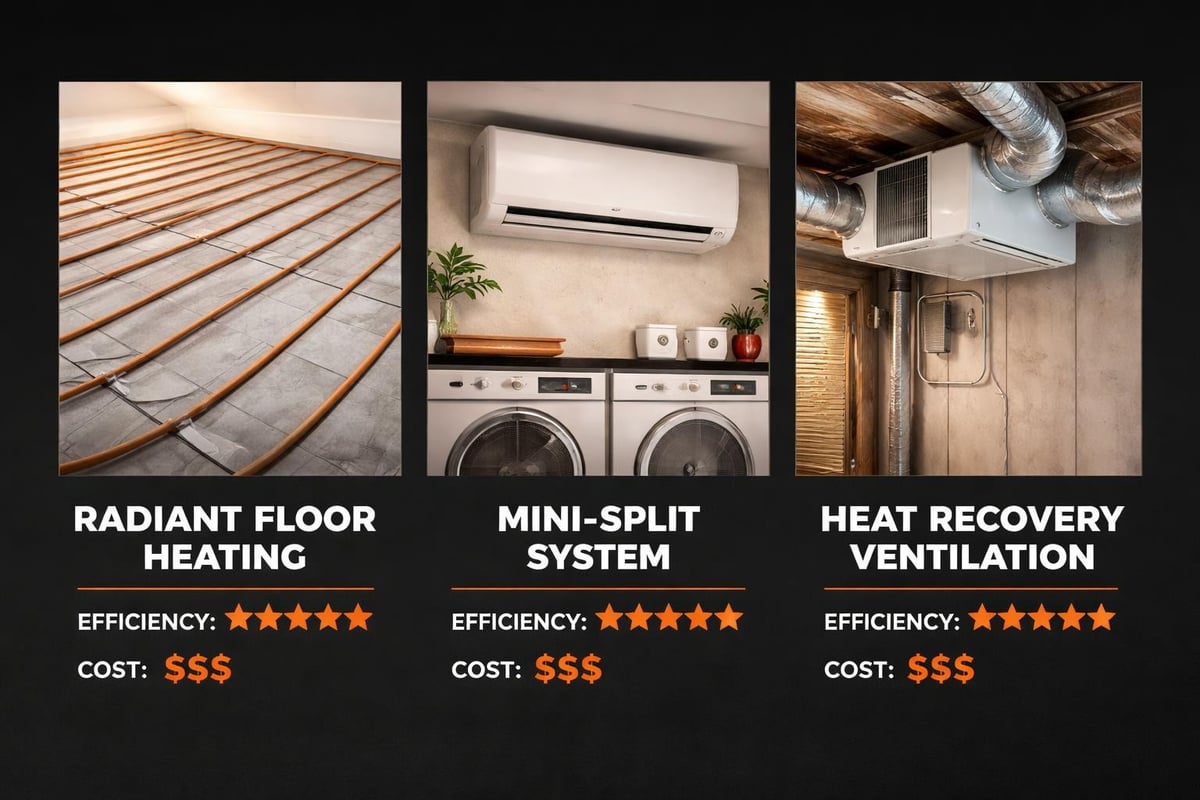
Ventilation systems deserve special attention. Energy recovery ventilators (ERVs) exchange stale indoor air with fresh outdoor air while recovering heat energy. This maintains air quality without wasting energy heating or cooling replacement air.
Air Quality Testing Schedule
Before renovation: Test for radon, mold spores, and humidity levels
During construction: Monitor VOC levels from new materials
After completion: Verify air exchange rates meet standards
Ongoing: Annual radon testing, seasonal humidity checks
The comprehensive green remodeling guidelines emphasize that indoor air quality should never be compromised for aesthetic choices.
Energy-Efficient Heating and Cooling Strategies
Maintaining comfortable basement temperatures year-round challenges many homeowners. Green basement remodeling addresses this through smart system design rather than simply adding more heating capacity.
Radiant floor heating uses hot water tubes beneath flooring to create even, efficient warmth. It eliminates cold spots and reduces energy consumption compared to forced-air systems. Paired with a high-efficiency boiler, radiant systems achieve remarkable efficiency in Okanagan climate conditions.
Mini-split heat pumps offer another excellent option. These ductless systems heat and cool specific zones, allowing you to condition only occupied spaces. Modern heat pumps work efficiently even in cold weather, making them ideal for Sicamous contractor projects where temperatures drop significantly.
Don't overlook passive strategies. Thermal mass materials like concrete floors absorb heat during the day and release it slowly at night, stabilizing temperatures naturally. Strategic window placement (for walk-out basements) captures natural light and solar heat while maintaining privacy.
Insulation standards matter tremendously. Basement walls in Canadian climates should reach R-20 minimum, with R-30 or higher for ceiling areas. Continuous insulation without thermal bridging prevents heat loss through framing members.
Sustainable Design Elements That Add Value
Green basement remodeling succeeds when sustainability meets style. Natural materials bring warmth and character while supporting environmental goals. Exposed wood beams from reclaimed lumber create architectural interest. Stone accents using locally sourced materials reduce transportation impacts while celebrating regional aesthetics.
Built-in storage maximizes space efficiency, reducing the need for additional furniture manufacturing. Custom shelving from sustainably harvested wood or recycled materials serves both form and function.
Consider multi-purpose spaces carefully. A home office that converts to a guest room provides flexibility without requiring separate rooms. Exercise areas that double as playrooms adapt as family needs change.
When planning your interior renovation, think about natural light solutions:
- Light tubes bringing daylight to interior spaces
- Enlarged window wells for walk-out configurations
- Reflective paint colors maximizing available light
- Glass partition walls sharing light between rooms
Water conservation extends to basement spaces too. If adding a bathroom or wet bar, install low-flow fixtures, dual-flush toilets, and tankless water heaters that provide endless hot water while using less energy than traditional tank systems.
| Feature | Traditional Cost | Green Alternative | Benefit |
|---|---|---|---|
| Carpeting | $3-5/sq ft | Cork flooring $6-8/sq ft | Renewable, antimicrobial |
| Standard paint | $25/gal | Low-VOC paint $35/gal | Better air quality |
| Fiberglass insulation | $0.60/sq ft | Recycled denim $1.20/sq ft | No irritants, recycled |
| Incandescent lighting | $2/bulb | LED lighting $8/bulb | 75% energy savings |
Working with Experienced Green Building Professionals
Successful green basement remodeling requires expertise beyond typical renovation knowledge. Finding contractors who understand sustainable building practices ensures your project delivers promised benefits.
Look for professionals with green building certifications or demonstrated experience with eco-friendly projects. Ask about their familiarity with sustainable building materials and energy-efficient solutions specific to basement environments.
During initial consultations, discuss:
- Previous green remodeling projects with verifiable results
- Relationships with suppliers of sustainable materials
- Understanding of regional climate challenges
- Approach to moisture management and air quality
- Warranty coverage for eco-friendly systems
Communication style matters significantly. Contractors should explain options clearly, helping you understand trade-offs between different sustainable approaches. They should welcome questions and provide detailed written proposals.
Budget transparency builds trust. Green materials sometimes cost more initially, but honest contractors explain long-term savings that offset higher upfront investments. They should provide realistic timelines acknowledging that specialty materials may require longer lead times.
For homeowners throughout the Okanagan and Shuswap regions, working with local professionals offers distinct advantages. They understand regional building codes, climate challenges, and material availability. They can recommend solutions proven in similar homes rather than generic approaches that may not suit local conditions.
Planning Your Green Basement Project Timeline
Rushing green basement remodeling projects often leads to compromised results. Proper planning ensures sustainable choices integrate seamlessly into your design.
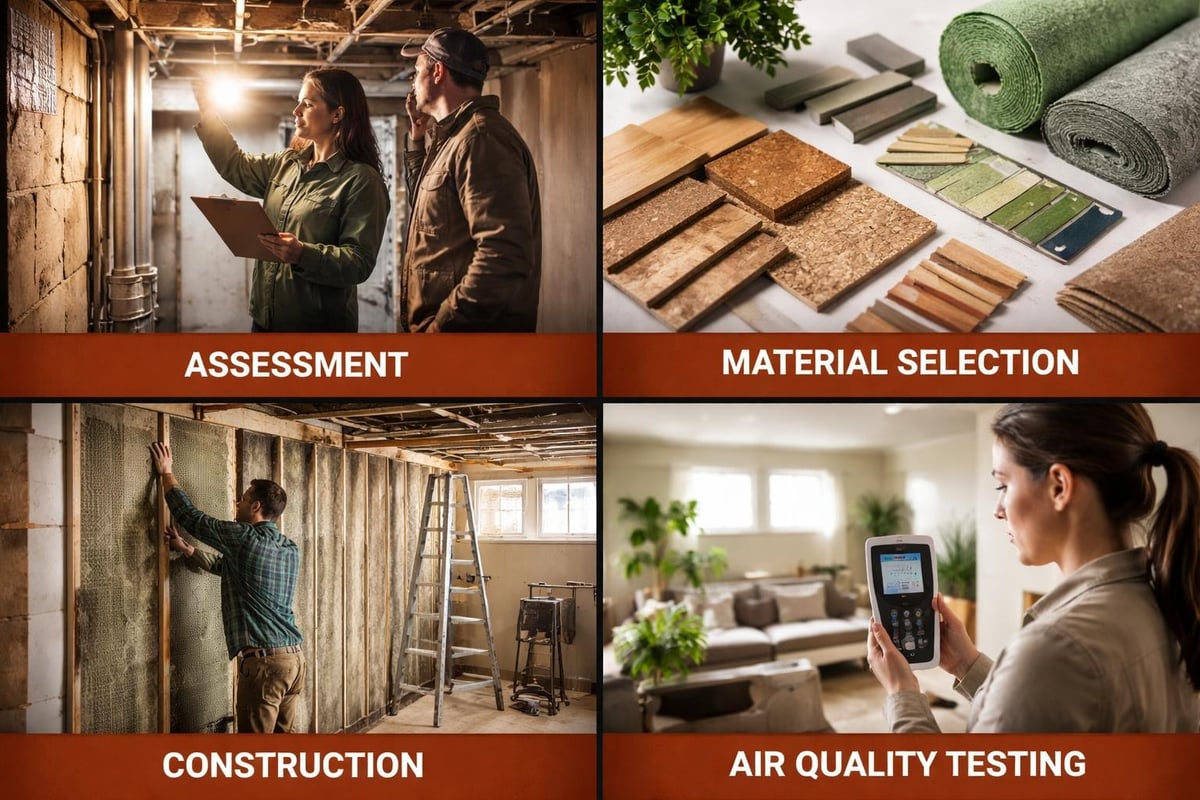
Phase 1: Assessment and Design (4-6 weeks)
Begin with thorough basement evaluation. Test for radon, moisture levels, and structural issues. Work with designers to create layouts maximizing natural light and energy efficiency. Research sustainable material options and verify availability in the Okanagan region.
Phase 2: Permits and Preparation (2-3 weeks)
Secure necessary building permits. Order specialty green materials with extended lead times. Schedule inspections required for electrical, plumbing, and structural work. Clear the basement and protect existing HVAC systems.
Phase 3: Core Construction (8-12 weeks)
Install moisture management systems first. Frame walls using sustainable lumber or metal studs. Run electrical and plumbing with energy-efficient fixtures. Apply insulation following proper vapor barrier protocols. Install drywall or alternative wall systems.
Phase 4: Finishing Touches (4-6 weeks)
Complete flooring installation with eco-friendly materials. Paint using low-VOC products. Install lighting, fixtures, and built-ins. Add final trim and details. Conduct air quality testing before occupancy.
Weather considerations affect timelines in Sicamous and surrounding areas. Plan major work during moderate weather months when ventilation and material delivery prove easier. Winter projects may require additional heating during construction, impacting both timeline and budget.
Maximizing Natural Resources and Minimizing Waste
Every green basement remodeling project generates waste, but thoughtful planning dramatically reduces what ends up in landfills. Deconstruction rather than demolition saves materials for reuse. Old lumber becomes shelving. Concrete can be crushed for drainage material. Metal goes to recycling centers.
Order materials precisely to minimize excess. Work with suppliers who accept returns of unopened products. Choose durable, moisture-resistant materials that won't need replacement in a few years.
Jobsite practices matter too:
- Separate waste streams for efficient recycling
- Protect materials from weather damage during storage
- Use leftover paint for primer coats or donate to community projects
- Save wood scraps for kindling or pet bedding
Document your green choices for future homeowners. Create a maintenance guide explaining sustainable systems and materials. Include warranty information, filter replacement schedules, and recommended green cleaning products that won't damage specialized finishes.
Regional Considerations for Okanagan Basement Projects
Climate and geography shape green basement remodeling decisions throughout the Okanagan Valley and Shuswap regions. Homes near lakes face unique moisture challenges requiring robust waterproofing systems. Properties in rural areas may lack access to municipal services, making energy efficiency even more valuable.
Soil conditions vary significantly across the region. Clay soils retain moisture, demanding excellent exterior drainage. Sandy soils drain quickly but may shift, affecting foundation stability. Understanding your specific conditions helps contractors design appropriate solutions.
Local building codes increasingly incorporate green building standards. Staying current with requirements helps avoid costly modifications during inspections. Many municipalities offer rebates or incentives for energy-efficient upgrades, reducing your net investment in sustainable features.
Material availability influences project costs and timelines. Some eco-friendly products require shipping from distant suppliers, increasing both expense and carbon footprint. Whenever possible, choose locally manufactured materials or those available through regional distributors. Reclaimed materials from other Okanagan renovations offer both sustainability and local character.
Connecting with experienced renovation professionals who understand regional conditions ensures your green basement remodeling project addresses local challenges effectively. Their knowledge of proven strategies in similar homes eliminates guesswork and costly trial-and-error.
Smart Technology Integration for Sustainability
Modern green basement remodeling increasingly incorporates smart systems that optimize energy use automatically. Programmable thermostats learn your schedule, reducing heating when spaces aren't occupied. Smart lighting adjusts brightness based on natural light levels and turns off in empty rooms.
Energy monitoring systems provide real-time feedback on consumption, helping you identify waste and track savings from your green upgrades. Some systems integrate with utility providers, automatically shifting energy-intensive tasks to off-peak hours when rates are lower.
Consider these smart additions:
- Moisture sensors alerting you to leaks before major damage occurs
- Air quality monitors tracking VOCs, humidity, and particulates
- Smart window coverings maximizing solar gain in winter, blocking heat in summer
- Integrated controls managing multiple systems from single interfaces
Technology should enhance sustainability, not complicate it. Choose systems with intuitive controls that all family members can use. Prioritize devices from established manufacturers with strong warranty support and local service availability.
Creating Healthy Spaces for Your Family
Beyond energy savings and environmental benefits, green basement remodeling fundamentally improves living quality. Natural materials, proper ventilation, and toxin-free finishes create spaces where families thrive.
Chemical sensitivity affects more people than many realize. Traditional building products release formaldehyde, VOCs, and other compounds that accumulate in poorly ventilated basements. Green alternatives eliminate these exposures, particularly important in bedrooms or play areas where children spend significant time.
Natural materials offer sensory benefits too. Wood surfaces feel warm and inviting. Stone provides cooling relief during hot summers. Cork cushions footsteps, reducing noise transmission to upper floors.
Lighting design impacts both mood and health. Natural light exposure helps regulate sleep cycles and supports vitamin D production. When natural light isn't possible, full-spectrum LEDs provide similar benefits. Avoid harsh overhead fixtures in favor of layered lighting that creates ambiance while remaining energy-efficient.
Biophilic design principles bring nature indoors through living walls, natural materials, and visual connections to outdoor spaces. Even below-grade basements can incorporate these elements through careful planning and creative design approaches.
Cost-Effective Green Strategies for Every Budget
Not every homeowner can afford a complete green basement remodeling transformation immediately. Prioritizing improvements based on impact helps you start sustainably regardless of budget constraints.
High-impact, lower-cost strategies include:
- Sealing air leaks around windows, doors, and penetrations
- Adding insulation to walls and ceilings before finishing
- Installing LED lighting throughout the space
- Choosing low-VOC paints and finishes
- Using programmable thermostats for climate control
Medium-investment improvements with excellent returns:
- Upgrading to energy-efficient windows or enlarging existing ones
- Installing mini-split heating/cooling systems
- Selecting sustainable flooring materials like bamboo or cork
- Adding proper ventilation with heat recovery
Significant investments for comprehensive sustainability:
- Complete moisture management systems with exterior waterproofing
- Radiant floor heating with high-efficiency boilers
- Advanced air filtration and humidity control
- Premium sustainable materials throughout
Working with experienced contractors helps identify the most cost-effective sequence for phased improvements. Some homeowners complete structural and systems work initially, then finish surfaces over time as budgets allow. This approach ensures critical elements like moisture control and insulation are addressed properly from the start.
Many green remodeling strategies qualify for energy efficiency rebates, tax credits, or financing programs with favorable terms. Research available incentives before finalizing budgets, as these can significantly offset upfront costs.
Measuring Success Beyond the Project
Once your green basement remodeling project completes, ongoing monitoring ensures you realize expected benefits. Track energy bills monthly, comparing usage to pre-renovation baselines. Most homeowners see 20-30% reductions in heating costs within the first year.
Maintain systems properly to preserve efficiency gains:
- Replace HVAC filters on recommended schedules
- Clean dehumidifier coils and check drainage systems
- Inspect sump pumps before rainy seasons
- Test radon levels annually
- Monitor humidity levels throughout the year
Document improvements through photos and energy data. This information proves valuable when selling your home, demonstrating the value of green upgrades to potential buyers. It also helps you make informed decisions about future renovation projects elsewhere in your home.
Share your experience with others considering sustainable renovations. Word-of-mouth recommendations from satisfied homeowners help build awareness about green building practices and support contractors who prioritize sustainability.
The skills and knowledge gained from your basement project often inspire additional green improvements. Many homeowners tackle kitchen remodeling Okanagan projects next, applying lessons learned about sustainable materials, energy efficiency, and healthy indoor environments.
Green basement remodeling delivers lasting benefits that extend far beyond initial construction, creating healthier homes while reducing environmental impact and operating costs. Whether you're planning a complete transformation or starting with targeted improvements, the right approach balances sustainability with functionality and style. With over 32 years of experience in residential and commercial projects throughout the Okanagan, Sicamous, and Shuswap regions, our team brings the expertise needed to make your green renovation vision a reality using quality materials and proven sustainable practices. Start your renovation with a team that cares-Kreeative Renovations & Design Co. is ready to help you create a beautiful, eco-friendly space that serves your family for decades to come.


